
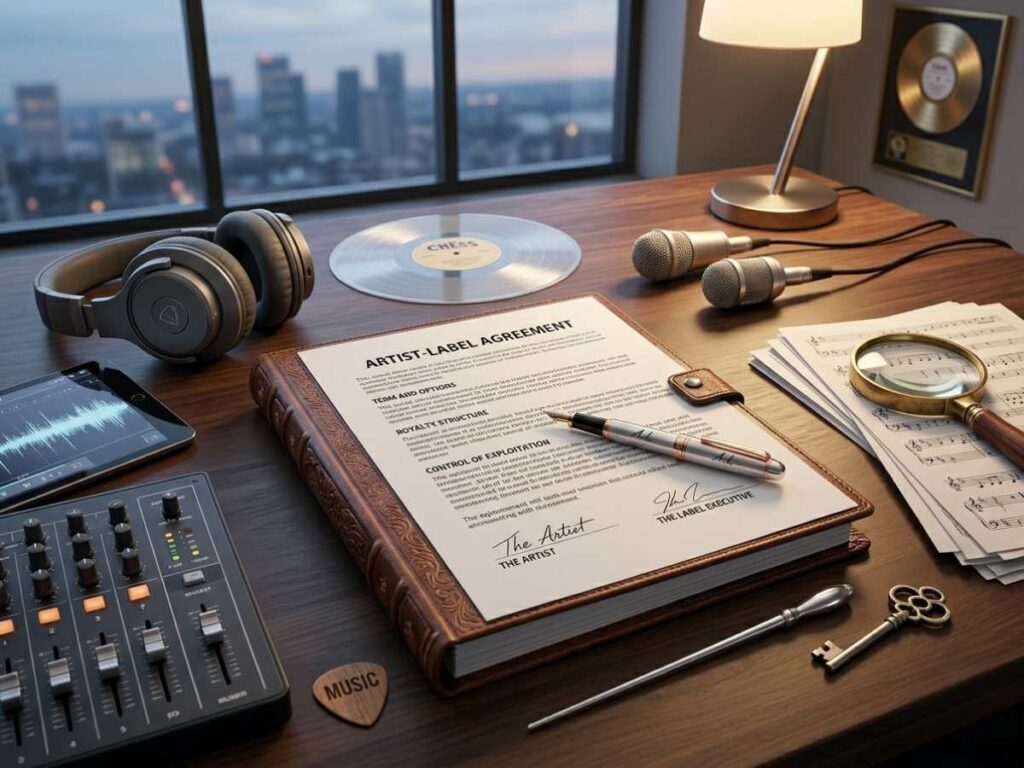
A young rapper from Austin spent three years building his fanbase from scratch. Labels noticed. One reached out, the conversation moved fast, and he signed within a week. Four years later, he still doesn’t own a single track he recorded during that deal. The label holds the masters. The royalties barely cover what they say he owes them. And there’s nothing he can do about it.
This is not a rare story. It happens to artists at every level, in every genre. Music contracts are legally binding documents that shape your career, your income, and your creative freedom for years. Understanding a music artist’s contract agreement before you sign one is not optional. It is the most important business decision you will ever make as an artist.
This post breaks down the most common types of music contracts, the clauses that matter most, the red flags to avoid, and when you need a music contract attorney in your corner.
Types of Music Contracts
| Contract Type | What It Covers | Key Risk |
| Record Deal | Masters, distribution, royalties | Losing ownership of recordings |
| Music Publishing Agreement | Composition rights, royalty collection | Giving up too much of your songwriting |
| Music Licensing Contract | Sync, mechanical, performance rights | Vague terms, low fees, perpetual rights |
| Band/Group Agreement | Ownership splits, decision-making | No exit plan when members leave |
Why Music Contracts Matter More Than Ever
Streaming changed everything. A song can now generate income across dozens of platforms, sync opportunities, and licensing deals simultaneously. That sounds good. But it also means more contracts, more parties involved, and more places where your rights can get quietly signed away.
Today’s artists deal with music industry contracts from labels, distributors, sync agencies, playlist curators, and brand partners. Even independent artists who never sign with a label end up signing licensing, collaboration, and producer contracts. The assumption that contracts only matter if you’re on a major label is outdated and expensive.
A bad deal doesn’t just cost you money. It can cost you the ability to release music, perform certain songs, or work with other artists without someone else’s permission.
The Most Common Types of Music Contracts
Record Deals
Traditional record deals give the label rights to distribute and market your music in exchange for an advance and royalties. A 360 deal goes further, cutting the label into your touring income, merchandise, and endorsements. Labels often ask for master recordings, which means they own the recordings even if you wrote every word.
Music Publishing Agreements
A music publishing agreement covers your compositions, meaning the underlying songs, not the recordings. Publishers help collect royalties from radio, streaming, and sync placements. Co-publishing deals let you retain a share of the publishing, while full-publishing deals hand over most of it. Know the difference before you sign.
Music Licensing Contracts
A music licensing contract grants someone the right to use your music in a specific way. Sync licenses cover TV, film, and advertising. Mechanical licenses apply when someone reproduces your song in a recording. Performance licenses govern public performances through services such as ASCAP and BMI. The fine print determines whether you get paid once or receive ongoing royalties, so read every line.
Band and Group Agreements
If you’re in a band, you need a written agreement before you record anything or play a single show. A music band contract template should cover who owns the name, how revenue gets split, who makes decisions, and what happens if someone leaves or the group breaks up. Without this, disputes can end careers and friendships at the same time.
Key Clauses Every Artist Must Understand
Term Length and Options
Most label contracts include option periods, which give the label the right to unilaterally extend the deal. You might sign for one album but end up locked in for five or six years if the label keeps exercising its options.
Rights and Ownership
This is the most critical section in any music rights contract. Who owns the masters? Who owns the composition? Watch for “work-for-hire” language, which can strip your ownership entirely. If you see it, get legal counsel before proceeding.
Royalty Rates and Revenue Splits
Standard streaming royalties are already low. Many contracts calculate your rate after deducting packaging costs, promotional expenses, and other fees that are rarely explained clearly. Recoupment means the label recoups its advance from your royalties before you see a cent. Artists often generate significant revenue before their first royalty check ever arrives.
Exclusivity Clauses
Some contracts prevent you from releasing any music independently, even under a different name, for the duration of the deal. Understand what you’re agreeing to before your creative options disappear.
Creative Control
Does the label have final say over your album artwork, collaborators, or tracklisting? Reversion clauses can return rights to you after a certain period if the label fails to release your music. Always ask for them.
Termination Terms
Know how to exit and what happens to your music if the deal ends. Some contracts leave released recordings permanently with the label, even after termination.
Red Flags to Watch For Before Signing
- Perpetual rights with no reversion clause
- Royalty language that is vague or undefined
- All-in royalty structures that bury your actual rate inside deductions
- Assignment clauses that allow the label to sell your contract to another company without your consent
- No advance, or an advance so small it will never recoup
Never sign any music agreement contract without a professional review. No matter how good the offer sounds.
Do You Need a Music Contract Attorney?
If the contract is longer than a handshake agreement, yes. A music contract attorney does more than read documents. They negotiate terms, flag language that limits your rights, and rewrite clauses that work against you.
Artists in Texas have specific considerations. State law, local industry norms, and the growing music scene in Austin all affect how contracts are structured and enforced. A record deal lawyer in Austin understands both the legal side and the industry relationships that shape these deals locally.
When hiring an entertainment legal attorney, look for someone who specializes in music law, not general contract work. Ask about their experience representing artists specifically, not just labels or publishers.
Quick Checklist Before You Sign
- The attorney has reviewed the full contract
- Master and composition ownership is clearly defined
- Term length and option periods are listed, and are reasonable
- Recoupment structure is explained in plain language
- Royalty rates are specific and verifiable
- A reversion or exit clause is included
- Exclusivity limits are fair and limited in scope
- Audit rights are included
Treat Your Music Career Like a Business
A contract is not just paperwork. It is the legal foundation on which your entire music career is built. Artists who take it seriously early protect their income, their catalog, and their freedom to create on their own terms.
If you are signing any music industry contract and have questions about what it means for your rights and your future, speak with a qualified attorney before you put pen to paper.
Ready to protect your music before you sign anything? The Adcox Firm provides full Entertainment & Media legal representation for artists, creators, and producers. Whether you need an entertainment lawyer in Austin, Nashville, Midland, Round Rock, Lubbock, Odessa, or Franklin, TN, our team is ready to review your contract, negotiate better terms, and make sure you keep what you create. Schedule a consultation today.
Frequently Asked Questions
1. What should a music artist’s contract agreement include?
It should cover ownership of masters and compositions, royalty rates, term length, exclusivity terms, creative control, and exit or termination conditions.
2. What is the difference between a record deal and a music publishing agreement?
A record deal covers the recordings you make, while a music publishing agreement covers the underlying songs you write. Both affect how you get paid.
3. What is a 360 deal in music?
A 360 deal gives the label a percentage of all your revenue streams, including touring, merchandise, and endorsements, not just music sales.
4. What does recoupment mean in a music contract?
Recoupment means the label deducts its advance and certain costs from your royalties before paying you anything. You can generate significant income and still receive nothing until the balance is cleared.
5. What is a reversion clause in a music contract?
A reversion clause returns the rights to your music after a set period if the label fails to release or actively exploit it. Always negotiate for one.
6. When should an artist hire a music contract attorney in Texas?
Before signing any music industry contract. A music contract attorney in Texas can identify unfavorable terms, negotiate better conditions, and protect your long-term rights.
7. What is work-for-hire language in a music contract?
Work-for-hire clauses can classify your recordings as the property of whoever hired you to create them, removing your ownership rights entirely.
8. What does a record deal lawyer in Austin do differently than a general attorney?
A record deal lawyer in Austin understands both Texas law and the local music industry, which means they can negotiate with the context a generalist might miss.